
Mat Pilates vs Reformer Pilates: Key Differences and Why Both Matter

Pilates can look deceptively simple from the outside. One person is lying on a mat doing slow, controlled movements. Another is on a machine with springs, straps, and a sliding carriage. Both are doing Pilates, yet the experience can feel completely different.
That is where the confusion starts. Is mat Pilates the “basic” version? Is reformer Pilates harder? Do you need the machine to get real results?
The short answer is that mat and reformer Pilates are different expressions of the same method. Each teaches control, strength, mobility, and body awareness in its own way. Together, they give a fuller picture of what Pilates was designed to do.

Pilates is a complete movement system
Pilates was originally developed as a full-body conditioning method. It was not limited to one piece of equipment or one type of class. The traditional Pilates system includes mat work and apparatus work, including the reformer, Cadillac, chair, barrels, and other tools.
The goal stays consistent across all of it: build strength with control, improve alignment, train the breath, and help the body move with more ease.
Mat Pilates gives the method its foundation. It teaches how to organize the body without external support. The reformer takes those same movement ideas and adds springs, straps, pulleys, and a moving carriage. That equipment can make an exercise more supported, more challenging, or both.
This is why the debate around Mat Pilates vs Reformer Pilates misses the larger point. They are not rivals. They are partners.
What Mat Pilates is
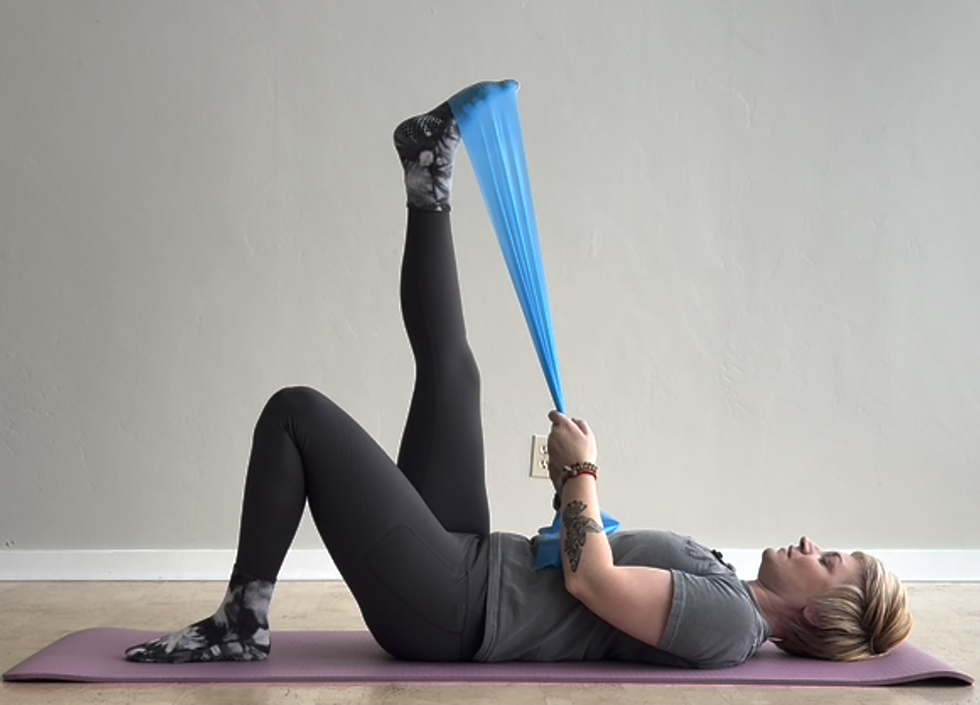
Mat Pilates is performed on a thick mat, about 1/2 thick or more. You are using the body’s own weight as the main source of resistance. Some classes use small props such as a magic circle, resistance band, small ball, or light weights.
The work often includes movements like:
The Hundred
Roll Up
Single Leg Stretch
Double Leg Stretch
Spine Stretch Forward
Saw
Teaser
Swan
Side Kick series
Mat Pilates asks the body to create its own support. There is no carriage to glide on, and there are no springs to assist the movement. That makes it honest. If the pelvis tilts, the ribs flare, or the shoulders grip, the mat will usually expose it.
This is one reason mat work can feel surprisingly demanding. The exercises may look minimal, but they require focus and coordination.
Mat Pilates is especially useful for learning control. It develops the deep abdominal muscles, spinal articulation, hip stability, and shoulder organization. It also teaches how to move from the center of the body rather than relying on momentum.
For many people, mat Pilates is also the most accessible form of the method. It requires little space and minimal equipment. Once someone understands the basics, it can be practiced at home, in a studio, or while traveling. This is a key reason why I started and created the online mat programs. I want you to continue your Pilates practice even if you are short on time, have a limited budget or travel a lot.

What Reformer Pilates is
Reformer Pilates uses a specialized apparatus called a reformer. It has a sliding carriage, springs for resistance, a footbar, shoulder blocks, and straps for the hands or feet. The springs can be adjusted to change the level of support or challenge.
Common reformer exercises include:
Footwork
Leg circles in straps
Short spine massage
Long stretch
Elephant
Knee stretches
Mermaid
Rowing
Pulling straps
The reformer gives feedback. The springs respond immediately to how someone moves. If the movement is rushed or uneven, the carriage may jerk or wobble. If the body controls the spring tension well, the carriage glides smoothly.
That feedback is one of the biggest benefits of reformer work. It helps people feel alignment, rhythm, and resistance in a very clear way.
The reformer can also make Pilates more adaptable. For example, springs can assist a movement that might be too hard on the mat. The same springs can also add resistance and make a familiar exercise more demanding. The carriage sits up higher and is easier for people with injuries or mobility issues to get on and off of.
A beginner might use the reformer to better understand alignment. An advanced practitioner might use it to build power, endurance, and precision. The machine is not just for one level.
The key differences between Mat and Reformer Pilates
Mat and reformer Pilates share the same principles, but they challenge the body in different ways.
Mat Pilates
Uses body weight as the main resistance.
Requires the body to create its own support.
Easy to practice almost anywhere.
Often exposes core control and compensation patterns quickly.
Can feel more abstract at first because there is less external guidance.
Builds independence and body awareness.
Reformer Pilates
Uses springs, straps, and a moving carriage.
Can assist or resist movement depending on spring setup.
Requires specialized equipment.
Gives clear feedback through the carriage and springs.
Can feel more structured because the machine guides the path.
Builds strength, coordination, and precision with resistance.
Neither one is automatically easier.
A mat exercise can feel harder because there is no help from the equipment. A reformer exercise can feel harder because the springs demand control through a range of motion.
The difference often comes down to the purpose of the exercise. The reformer might support someone through a movement pattern, while the mat asks the person to perform that same pattern independently.

Mat Pilates builds the foundation
Mat work has a special place in the Pilates system because it teaches the essentials with very little distraction.
There is nowhere to hide on the mat. The floor provides a stable surface, but the body must manage the movement. That makes mat Pilates powerful for developing:
Breath control
Spinal mobility
Core strength
Hip and shoulder stability
Balance between effort and ease
Awareness of alignment
Mat Pilates also helps people understand the rhythm of the method. Many classical mat sequences are designed to move from one exercise into the next with flow. The transitions matter. The setup matters. The breath matters.
That level of attention can change how people move outside class. The goal is not just to perform an exercise well. The goal is to carry better coordination into walking, lifting, sitting, sports, dance, or everyday movement.
Mat work can also build confidence. When someone learns to control their body without equipment, they develop a kind of movement independence. That independence is one of the great strengths of Pilates.
Reformer Pilates expands the work
The reformer adds another layer. It lets the body experience Pilates through resistance, support, and movement.
One of the reformer’s biggest strengths is its range. A person can lie down, sit, kneel, stand, pull straps, press through the feet, or work with one side of the body at a time. That variety helps train the body from many angles.
The springs make the work feel alive. Unlike a fixed weight, spring resistance changes as it stretches. That means the body has to control both the start and finish of each movement. It must resist the springs on the way out and manage them on the way back in.
This builds more than strength. It builds control through motion.
Reformer work can also help people feel muscles and movement patterns that are hard to access on the mat. Footwork, for example, can teach leg alignment while the body lies supported on the carriage. Strap work can help someone feel how the hips move without overusing the lower back.
For people who need modifications, the reformer can offer useful options. For people who need more challenge, it can deliver that too. The same machine can serve many bodies and many goals when used by a skilled instructor.

Why both forms matter
Mat Pilates and reformer Pilates complete each other.
Mat work teaches self-support. Reformer work teaches resistance and feedback. Mat work builds independence. Reformer work refines precision. Mat work asks, “Can you control your body in space?” Reformer work asks, “Can you control your body against changing resistance?”
Together, they create a more balanced practice.
A person who only does reformer may become used to the guidance of the machine. The mat can reveal whether the same control exists without springs or straps.
A person who only does mat may build great body awareness but miss the benefits of spring resistance, supported range, and apparatus variety. The reformer can help deepen the same concepts in a different way.
This is part of what makes Pilates so rich. The method repeats ideas across different settings. A movement learned on the reformer may improve an exercise on the mat. A skill built on the mat may make reformer work cleaner and more efficient.
The body learns through repetition, contrast, and feedback. Mat and reformer Pilates provide all three.
Which one should you start with
There is no single correct starting point. The best choice depends on access, goals, comfort level, and the quality of instruction.
Mat Pilates may be a good starting point for someone who wants:
A simple and affordable way to begin
A practice they can do at home
Better core control and body awareness
A clear foundation in Pilates principles
Minimal equipment
Reformer Pilates may be a good starting point for someone who wants:
More tactile feedback
A structured studio environment
Adjustable resistance
Support for certain movement limitations
Has issues getting down and up from the floor
Some people feel more comfortable starting on the reformer because the equipment gives guidance. Others prefer mat classes because they are simpler and less intimidating.
The instructor matters more than the format. A thoughtful teacher can make mat work accessible and reformer work safe. A rushed class can make either one feel confusing.
If there are injuries, chronic pain, pregnancy-related concerns, or medical conditions, it is best to speak with a qualified health professional before starting any new workout. Once you are cleared to start working out, be sure you find a trained Pilates instructor. A trained Pilates instructor will teach you the movements and where you body should be in space for each one along with adjusting your alignment.
Have questions? Email me or find me on Instagram or Tik Tok and reach out.


Comments